Tea Labor
Qing-era workers pick and sort leaves. Labor at picking, firing, grading, and packing made tea valuable before fashion followed.
Tea, routes, and language
An educational record of how tea spread: from Lu Yu’s early texts, through sea and land trade, to the words tea and cha, Taiwanese oolong, and hand-shaken tea today.
Overview
Camellia sinensis was cultivated and prepared in China for centuries before long-distance trade. As tea left Chinese ports and caravan routes, the plant became a commodity, and the words for it split: “te” along the sea, “cha” over land. This page follows that path into Taiwanese oolong and today’s hand-shaken tea.
Record
Qing prints and a nineteenth-century engraving record tea as labor and landscape: picking and sorting, merchant inspection, and Formosa planting near Tamsui, before tea became an everyday drink worldwide.
Qing-era workers pick and sort leaves. Labor at picking, firing, grading, and packing made tea valuable before fashion followed.

Merchants from the Dutch East India Company select and buy tea in Guangdong. Ships, porcelain, and tax systems carried the leaf into global trade.

An 1870 engraving of tea country near Tamsui. Mountain slopes, terraces, and ports show why Formosa tea entered export markets.
Routes
The words for tea split with the routes: sea trade carried the “te” family into Europe; overland routes carried “cha” across Central Asia and beyond.
Select a route to highlight it on the map.

Maritime
Sea trade from southern Chinese ports carried the “te” family of words into Dutch, English, French, and related languages.
Overland
Caravan and inland routes carried the “cha” family across Central Asia, Persia, Russia, and neighboring languages.
Trade
Along with porcelain and sugar, tea entered European and American daily life through ports, taxes, and social custom.
Taiwan
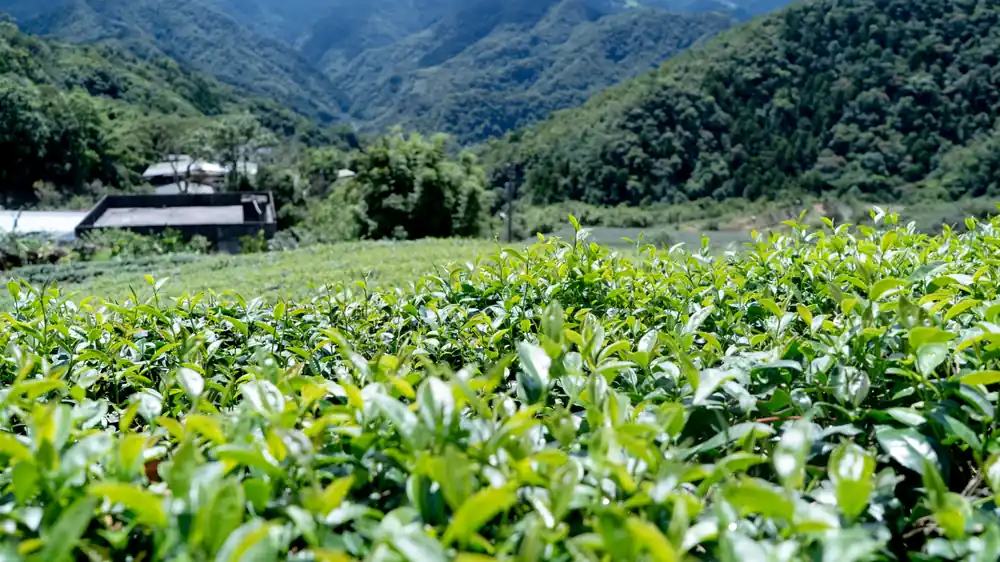
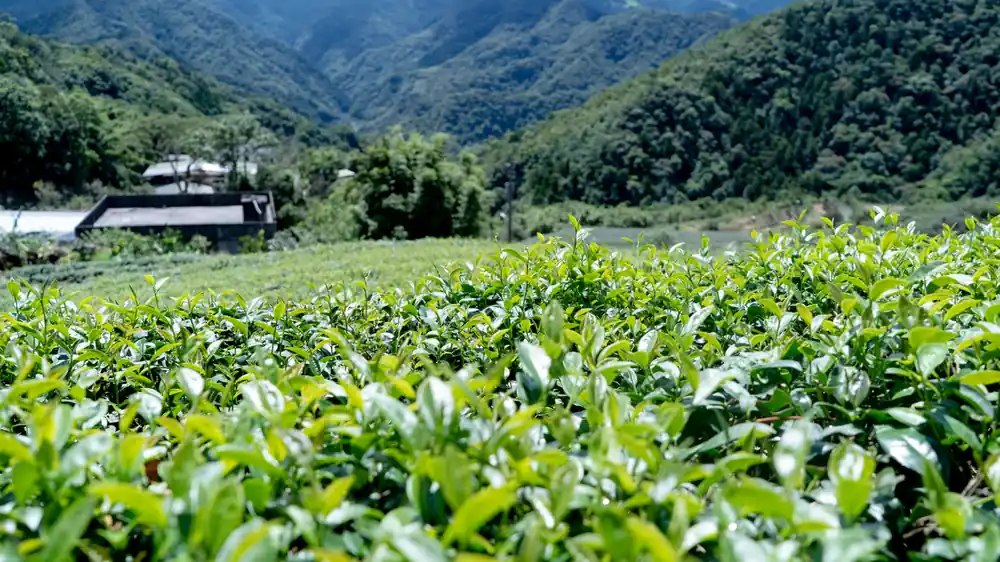
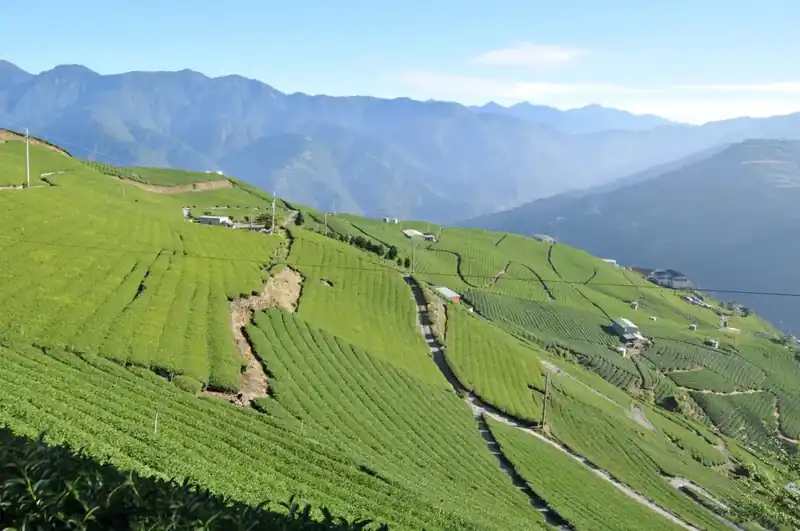
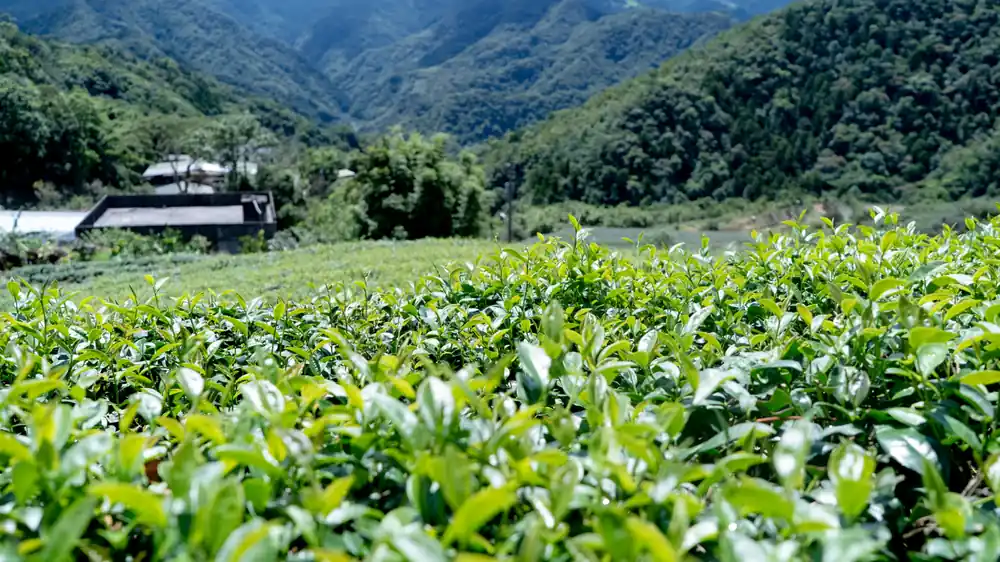
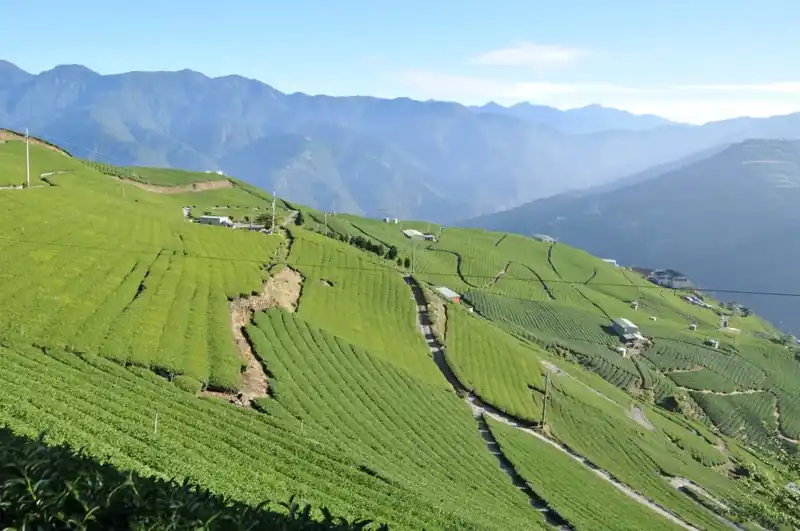
From wild mountain tea to Fujian craft, Formosa Oolong export, and later high mountain oolong, a regional chapter in the longer history of tea.
1640s
Early records note wild tea in Taiwan’s interior mountains, especially around Shuishalian.
18th to 19th c.
Tea plants and processing methods from Fujian took root in the hills of the Tamsui river basin.
1860s
John Dodd and Li Chunsheng helped establish Taiwanese oolong as an export known as Formosa tea.
1980s+
Cool altitude, mist, and lighter fermentation shaped the high mountain oolong style known today.
Hand-Shaken
Hand-shaken tea grew from tea bases and toppings. Sugar, ice, milk, and texture became part of everyday ordering, and tapioca pearls became its best-known add-on.
Black tea, green tea, oolong, Tieguanyin, or a seasonal brew forms the drink.
Milk, foam, fruit, jelly, and ice change body and aroma without replacing the tea.
Sweetness and ice levels are ordered by habit, part of how hand-shaken tea is made to taste.
Pearls are made from tapioca starch of the cassava root. The starch is rolled into balls, boiled until chewy, and often finished with sugar. Popularized in Taiwanese milk tea in the 1980s, they remain optional: one topping inside a larger drink.
Today
Selected Taiwanese hand-shaken tea shops and the drinks they are known for.
Four Seasons Oolong · No. 1
Handcrafted Pearl Milk Tea
Mango Mango · Fresh Fruit Teas
Tieguanyin Latte · Lemon Green Tea
Taiwanese tea · Fruit tea · Seasonal drinks
Tea cocktails · Milk tea · Contemporary blends
Traditional tea · Oolong · Tea retail heritage
Pour-over tea · Oolong · Fresh-brewed tea
 小仙島
小仙島Kampo milk tea · Herbal tea · Layered aroma
Premium Taiwanese tea · Mountain character
Black tea · Classic milk tea · Tea house identity
Kaohsiung heritage · Milk tea · No-ice style